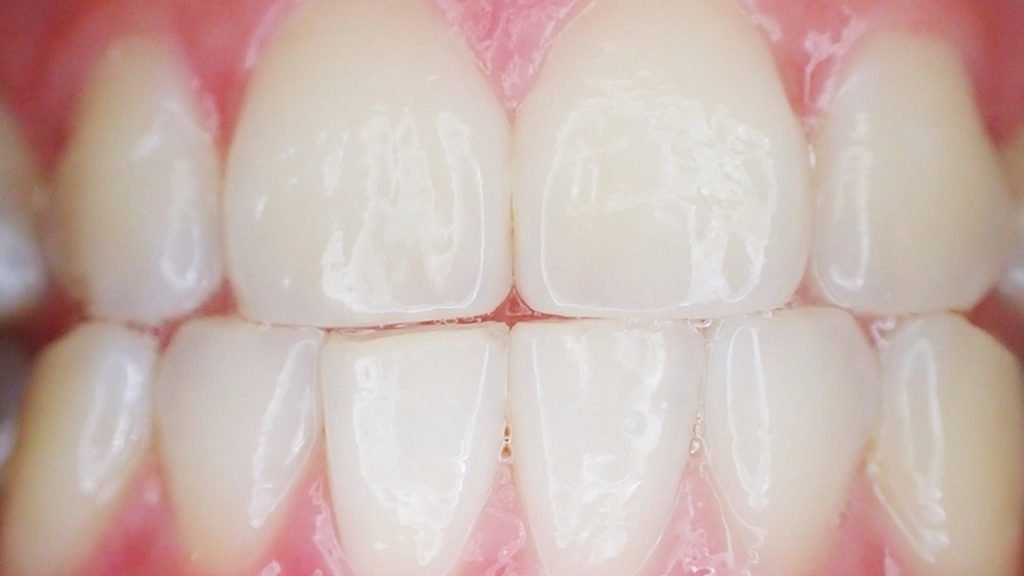
Porcelain veneers are thin shells bonded only to the front surface of the front teeth. When done for the right patient with the right technique, they are not harmful to the teeth. Usually only a very thin layer of enamel, around 0.3-0.7 mm, is removed. However, this reduction is irreversible: teeth that have had veneers will always need to be protected by a restoration. That is why it must be carefully planned who receives veneers and how much reduction is done.
How Much of the Tooth Is Removed?
For a veneer to bond firmly, the prepared surface should stay mostly within the enamel. Reduction is therefore usually limited so that it does not go beyond the thickness of the enamel. Depending on how much the colour and position of the tooth need to change, it ranges from 0.3 to 0.7 mm. In some cases veneers can be placed with very little or no reduction. This is not suitable for every tooth, though, as the teeth can end up looking bulky and too far forward.
A zirconia crown, by contrast, requires more removal from every surface of the tooth. In this respect, veneers preserve more of the tooth. For information on crowns, see our zirconia crown page.
When Can Veneers Cause Harm?
- Over-preparation: If the enamel is cut through to the dentin beneath, sensitivity increases and the bond weakens.
- The wrong indication: Trying to "straighten" very crooked teeth with veneers requires excessive reduction. In this case orthodontic treatment or clear aligners should be considered first.
- Clenching and grinding: In people who clench their teeth at night, veneers can crack or come off. These patients need to wear a night guard.
- Gum problems: If the edge of the veneer does not fit the gum properly, gum inflammation and discolouration at the edges can occur. The gums must be healthy before treatment.
How Long Do Veneers Last?
With good care, porcelain veneers usually last 10-15 years or longer. Because porcelain does not stain, it keeps its colour for a long time. The main factors that shorten their life are fracture (biting hard objects, clenching), gum recession exposing the edges, and decay at the edges. A systematic review pooling clinical studies reported a 10-year survival of 95.5% for porcelain veneers, with fracture and debonding as the most common complications. Composite veneers require less reduction, but they can pick up stains over time and may need to be replaced more often.
Is There Pain After Veneers?
The preparation is done under local anaesthesia, so no pain is felt. For a few days after bonding, mild sensitivity to cold and a feeling that the teeth are "different" are normal. You get used to speaking and biting within a few days. If pain lasts or one tooth touches before the others when you bite, the bite should be checked and adjusted.
Who Are Veneers Not Suitable For, or Who Needs Other Treatment First?
- People with untreated decay or gum disease (treated first),
- Teeth with very little enamel left,
- People with severe crowding or bite problems (orthodontics first),
- People with severe clenching that is not under control.
Frequently Asked Questions
Do veneers hurt?
The area is numbed during preparation, so no pain is felt. There may be short-lived sensitivity afterwards.
Can I see the result before getting veneers?
Yes. Before any permanent work is done on the teeth, the planned shape can be tried in the mouth with a temporary material. We describe this method in our digital smile design article.
Can teeth with veneers decay?
Porcelain does not decay, but the tooth at the edge of the veneer can. Regular brushing, flossing and check-ups are therefore important.
Whether your teeth are suitable for veneers can be assessed at an examination. For more information see our veneers page, and for fees in the TDB tariff our veneer fees article. To book an examination at our clinic in Güvenevler, Çankaya, call +90 540 640 6006.
This article is for general information only. Diagnosis and treatment decisions are made by your dentist after an examination.
Sources this article is based on
The information in this article is based on the sources below. You can read all of them free of charge via the links; under each one we summarise what it says.
- Long-Term Survival and Complication Rates of Porcelain Laminate Veneers in Clinical Studies: A Systematic Review
Alenezi A, Alsweed M, Alsidrani S, Chrcanovic BR. Journal of Clinical Medicine 2021;10(5):1074 · doi:10.3390/jcm10051074
What it says: Systematic review pooling clinical studies of porcelain veneers: 10-year survival was 95.5%; the most common complications were fracture and debonding, mostly in the first years.
- The Success of Dental Veneers According To Preparation Design and Material Type
Alothman Y, Bamasoud MS. Open Access Macedonian Journal of Medical Sciences 2018;6(12):2402–2408 · doi:10.3889/oamjms.2018.353
What it says: Review of veneer preparation design and materials: porcelain veneers give very good aesthetics and predictable longevity, while composite veneers are a more conservative but less durable option.
Related Videos on This Topic
Watch our specialist dentist explain this topic.