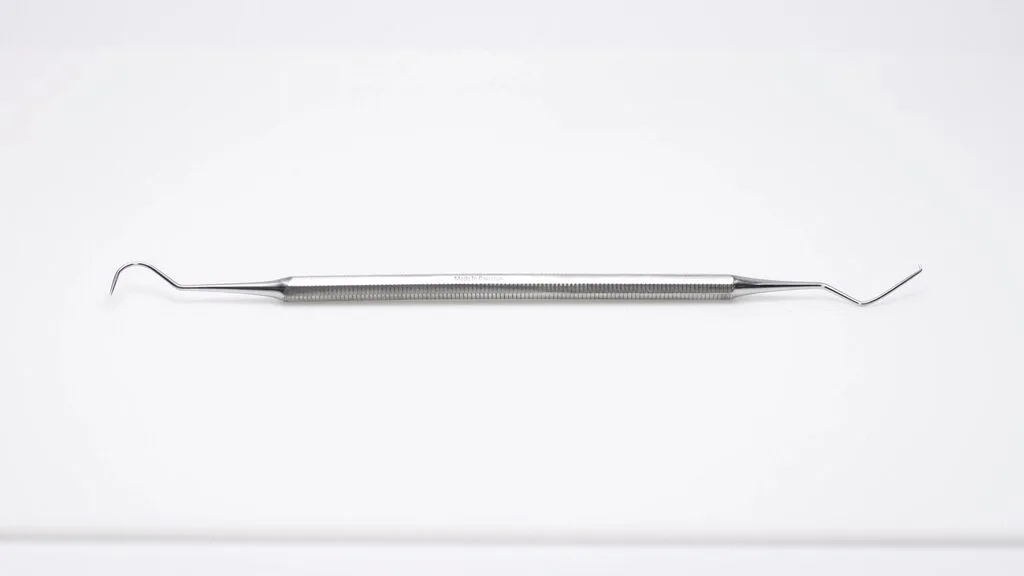
Most gum diseases are brought under control with tartar cleaning and proper oral care. However, if the disease has progressed, the gum pockets have deepened and bone loss has started, surgical treatment may come into play. In this article we explain in which cases surgery is needed and what these treatments are. For general information, see our gum disease treatment page.
Why is cleaning sometimes not enough?
Bacterial plaque matures and turns into tartar; tartar that settles under the gum causes material loss on the root surface. The process can begin first with gum recession, then erode the bone and progress inward. At this stage, cleaning the tartar on the surface alone is often not enough, because it is necessary to reach the tartar inside the deep pocket. Deep non-surgical cleaning usually comes first; if pockets of 5 mm or more remain when they are re-measured after healing, we consider surgical treatment in our clinic. The European Federation of Periodontology guideline recommends surgery for pockets of 6 mm or more and repeating the cleaning for 4–5 mm pockets.
What is flap surgery?
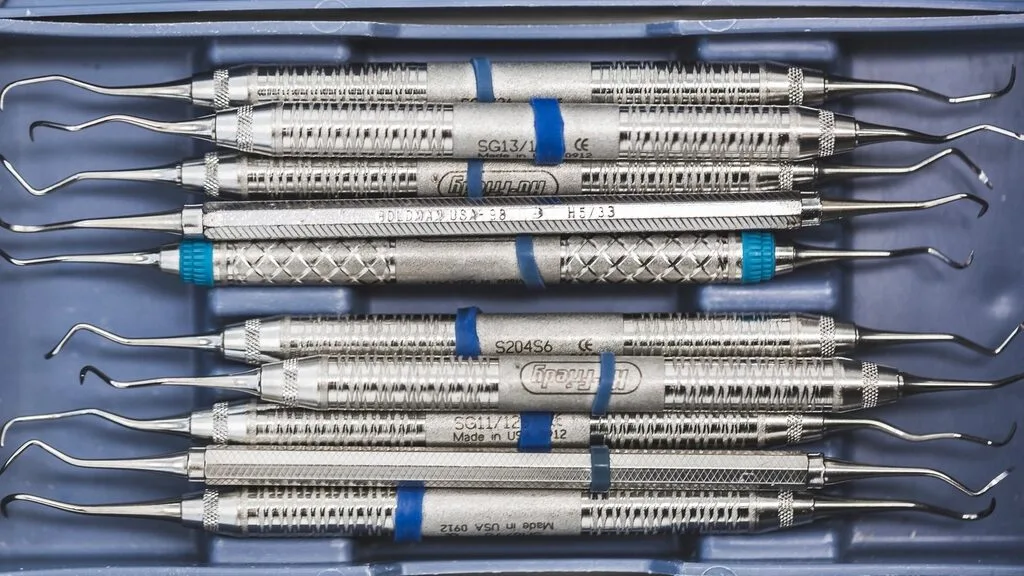
In flap surgery, the tissue around the tooth is opened with a small surgical procedure. In this way the tartar on the root surface is reached directly, by sight, and cleaned. When the procedure is finished, the area is closed with suitable stitches. Since all surgical procedures are performed under local anesthesia, the patient does not feel pain during the procedure.
Guided regenerative treatments
Sometimes simply removing the tartar is insufficient, because the disease has caused tissue loss. If we want to regain the soft and hard tissue we have lost, after removing the tartar we apply guided regenerative treatments. These are methods that guide the re-formation of bone and gum tissue by placing bone powder (graft) and special protective membranes in the lost area. The guideline recommends this treatment particularly for vertical bone defects 3 mm or deeper (intrabony defects).
After the procedure
Following the dentist's recommendations after every surgical procedure is important for healing. Avoiding hard foods that would irritate the area, following the painkiller and care plan recommended by the dentist and attending check-up appointments are at the top of these recommendations. Healing time and pain vary according to the scope of the procedure performed.
The way to avoid surgery
Most situations that require surgery could have been solved with simpler methods if caught at an early stage. For this reason, taking bleeding gums seriously, having tartar cleaned regularly and going for a check-up at least every six months is the most effective way of prevention. Good home care is also essential for surgery to succeed: the European guideline recommends not performing gum surgery in patients whose oral hygiene is inadequate.
This article is for general information only. Every patient's situation is different; the treatment plan is determined together with your dentist after the examination and any necessary imaging.
Sources this article is based on
The information in this article is based on the sources below. You can read all of them free of charge via the links; under each one we summarise what it says.
- Treatment of stage I–III periodontitis—The EFP S3 level clinical practice guideline
Sanz M, Herrera D, Kebschull M, et al. Journal of Clinical Periodontology 2020;47(Suppl 22):4–60 · doi:10.1111/jcpe.13290
What it says: European guideline: deep non-surgical cleaning comes first; if pockets of 6 mm or more remain after healing, surgery is suggested, while for 4–5 mm pockets repeating the cleaning is suggested. Regenerative surgery is recommended for vertical bone defects 3 mm or deeper. Gum surgery is not recommended for patients whose oral hygiene is inadequate.
Related Videos on This Topic
Watch our specialist dentist explain this topic.