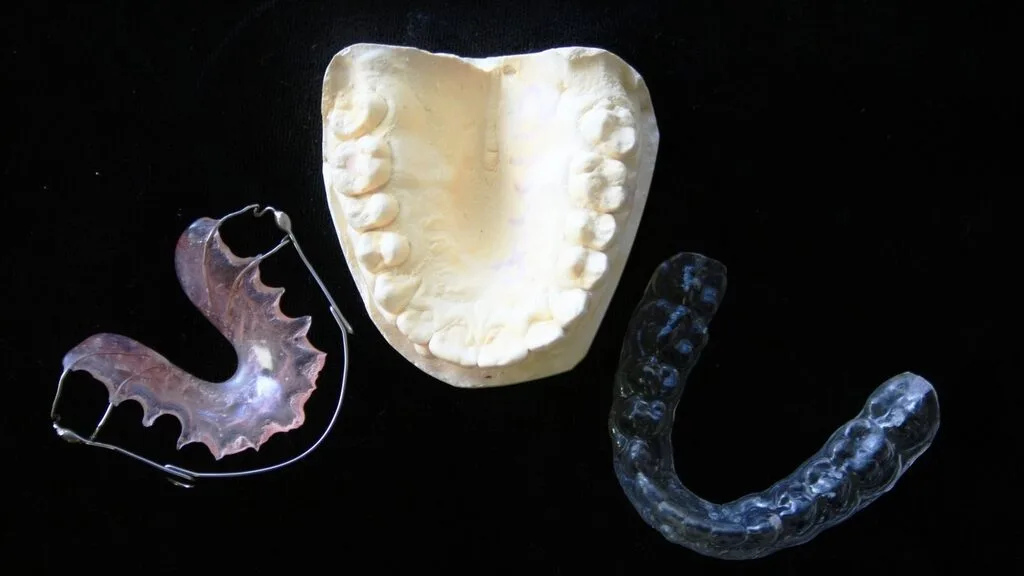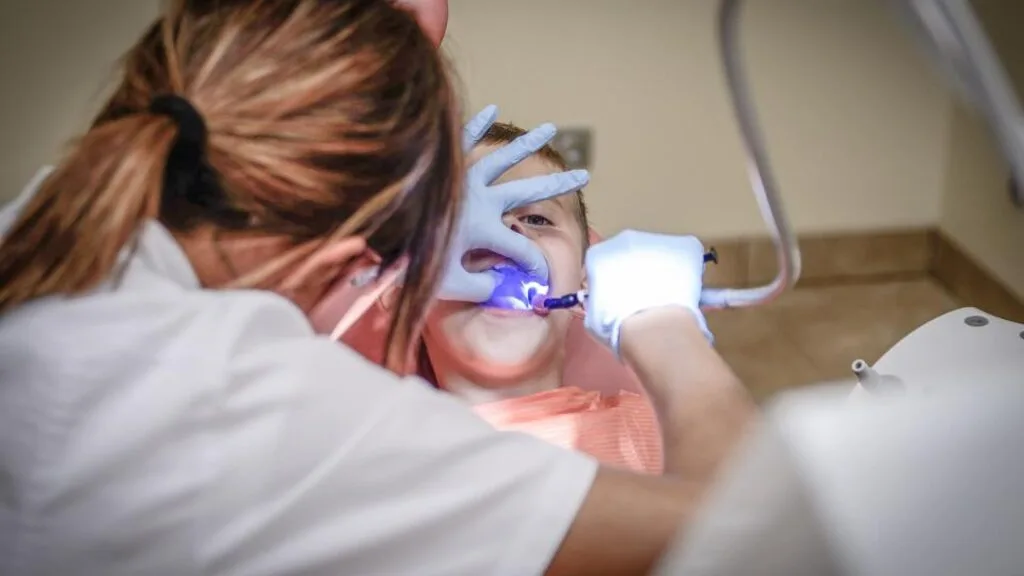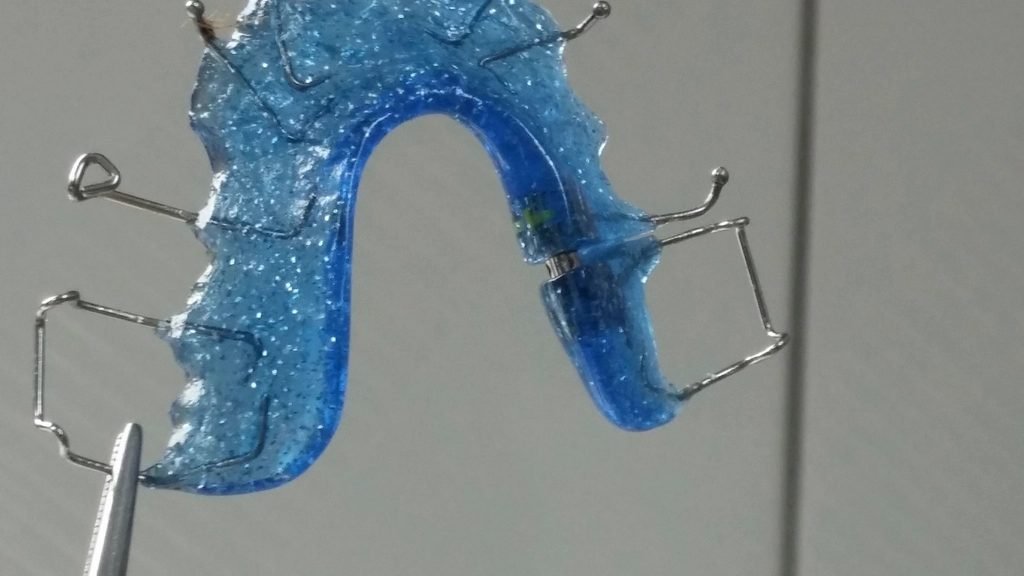
Clear aligners and braces are two orthodontic methods that gradually move teeth into the right position. For mild to moderate crowding, gaps and some bite problems, both can give good results. In more complex cases, braces usually give a more predictable result. The biggest difference with clear aligners is that they are removable. This makes cleaning and eating easier, but success depends on wearing the aligners 20-22 hours a day.
How Do the Two Methods Work?
Braces use small brackets bonded to the teeth with wires running through them. Metal or tooth-coloured (ceramic) brackets can be used. The wire is adjusted at check-ups to apply continuous, controlled force to the teeth.
With clear aligners, the whole treatment is planned from start to finish using impressions or scans of the teeth, and a series of clear aligners is made, each moving the teeth a tiny amount. Aligners are usually changed every 1-2 weeks. Small tooth-coloured bumps (attachments) may be bonded to some teeth to help the aligners grip.
Which Suits Whom?
- When clear aligners may be suitable: Mild to moderate crowding, gaps between teeth, some bite problems, and adults whose teeth have shifted again after earlier treatment.
- When braces may be more suitable: Severe crowding, teeth that need significant rotation or vertical movement, complex cases involving jaw discrepancies, and patients who will not be able to wear aligners consistently.
The right method is chosen based on an examination, X-rays and impressions. In some cases the two methods are combined.
Differences in Daily Life
- Appearance: Clear aligners are hardly noticeable unless someone looks closely. Tooth-coloured brackets are also less noticeable than metal.
- Eating: Aligners are taken out before meals, so there are no food restrictions, but teeth must be brushed and the aligners put back after every meal. With braces you need to avoid hard and sticky foods (hard nuts, caramel, chewing gum).
- Cleaning: Because aligners come out, brushing and flossing are easy. With braces, the areas around the brackets must be cleaned carefully with special brushes. Otherwise gum inflammation and white spots on the teeth can develop.
- Discipline: Braces are always in place. With aligners, if they are not worn enough, the teeth do not move as planned and treatment takes longer.
Does It Hurt?
Because the teeth are moving with both methods, there may be pressure and mild aching for 2-3 days after switching to a new aligner or after the wire is adjusted. This shows the treatment is working and eases within a few days. With braces, the brackets may irritate the inside of the cheeks and lips in the first weeks; orthodontic wax helps during this time.
How Long Does Treatment Take?
The duration depends more on the difficulty of the case than on the method. Mild cases can be completed in a few months, complex cases in two years or more.
After Treatment: Retention
Whichever method is used, teeth tend to move back towards their old positions once treatment ends. That is why a thin wire bonded behind the teeth or a clear retainer worn at night is used. Retention is the most important condition for lasting results and should not be neglected for as long as your dentist recommends.
In Adults, Gum Health Comes First
Orthodontic treatment can be done at any age, but teeth can only be moved safely within healthy gums and bone. In adults with gum disease, gum treatment is carried out before orthodontics, and the gums are checked regularly throughout treatment.
Frequently Asked Questions
How many hours a day should clear aligners be worn?
Usually 20-22 hours a day. Aligners should be taken out only for eating and brushing.
How should clear aligners be cleaned?
Each time they are taken out, rinse them with cold or lukewarm water and brush them gently with a soft brush. Hot water can distort their shape. Do not drink anything other than water while wearing them.
At what age can braces be fitted?
An orthodontic assessment around age 7 is recommended to catch jaw development problems early. Treatment usually starts once most of the permanent teeth have come in, typically around ages 11-13. In adults with healthy gums there is no age limit.
Which method suits you can be determined at an examination. For more information see our clear aligners and orthodontics pages, and for fees in the TDB tariff our clear aligner and braces fee articles. To book an examination at our clinic in Güvenevler, Çankaya, call +90 540 640 6006.
This article is for general information only. Diagnosis and treatment decisions are made by your dentist after an examination.