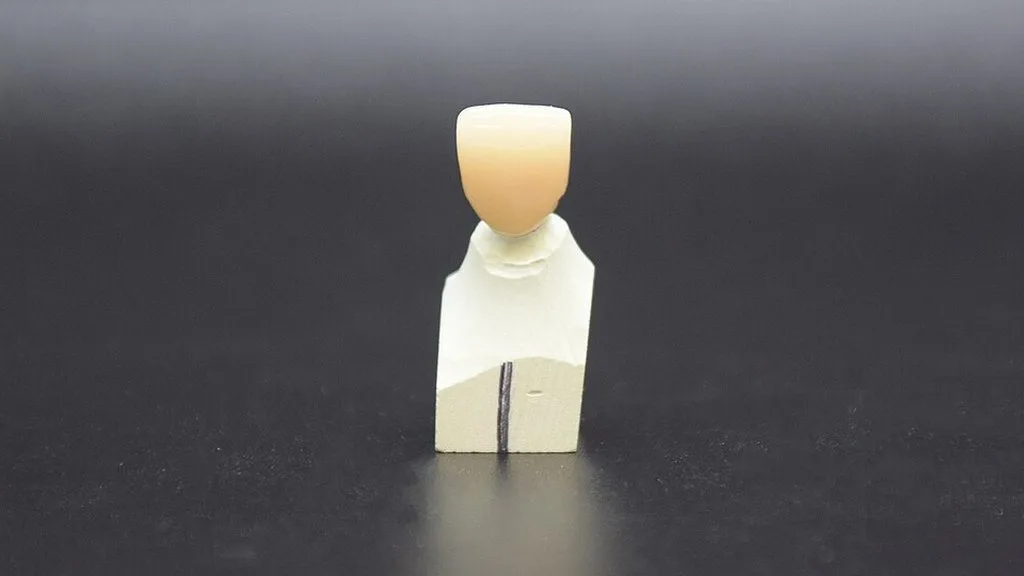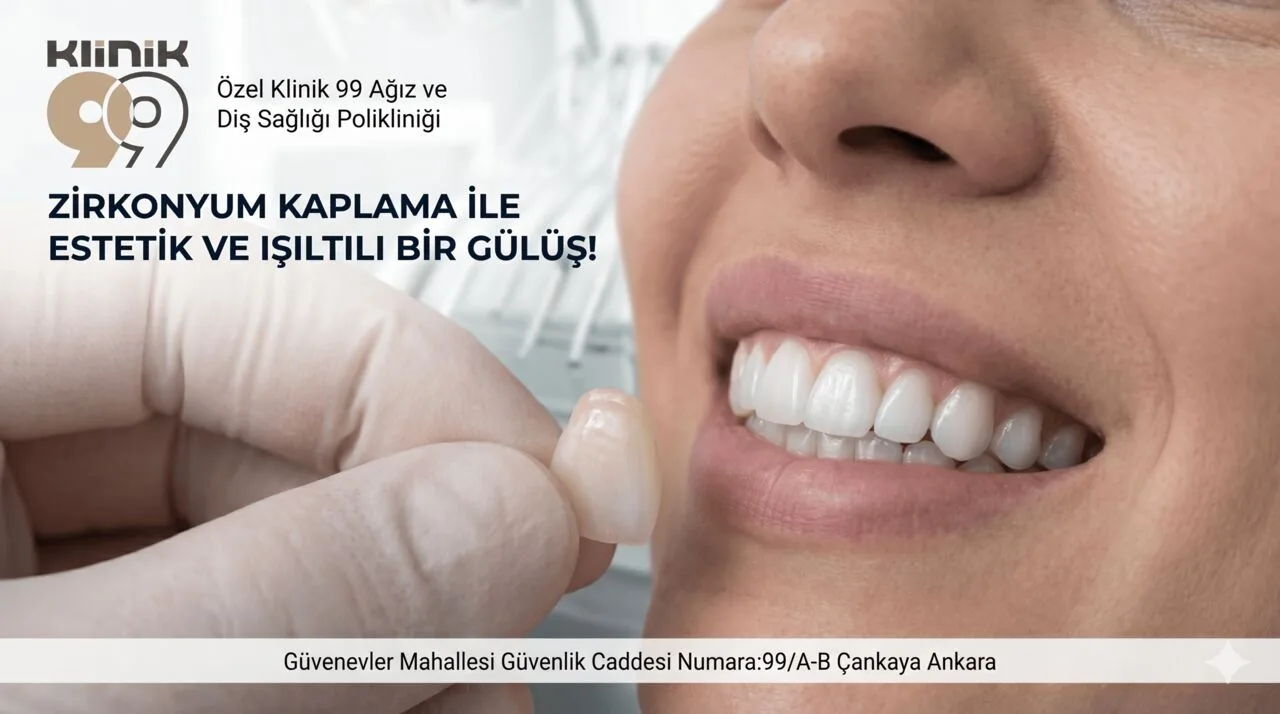
What Is a Zirconium Tooth?
Zirconium is a high-quality ceramic widely used in dentistry. This material, preferred in cosmetic dentistry, stands out for its appearance similar to natural teeth and its durability.
Advantages of Zirconium Dental Treatment
It offers an aesthetic and natural look, is highly compatible with human biology, is durable, its low thermal conductivity prevents discomfort, its smooth and slippery structure means little plaque builds up, it keeps its natural color for a long time even in contact with colored foods, and since it is not an allergic substance there is no compatibility problem.
The Zirconium Dental Treatment Process
Zirconium dental treatment generally consists of several stages:
1. Preparation and Impression
- Examination: The condition of the teeth is evaluated and the treatment plan is finalized.
- Tooth Reduction: The teeth are shaped by a very small amount (generally 1-2 mm) to make room for the crowns.
- Impression: A precise impression of the teeth is taken with digital scanners or traditional methods.
2. Fitting Temporary Teeth
- Because the teeth have been reduced, temporary crowns are fitted the same day to prevent sensitivity and preserve aesthetics.
3. Laboratory Stage
- The impressions are sent to the laboratory. Zirconium blocks are prepared untouched by hand, with high precision, using computer-aided CAD/CAM technology.
4. Try-In and Adjustment
- The fit in the mouth of the prepared zirconium framework and the porcelain applied on it is checked.
- Color, form and the patient's chewing comfort are tested, and final corrections are made if necessary.
5. Cementation
- When everything is perfect, the permanent zirconium crowns are fixed onto the teeth with special adhesives.
Caring for Zirconium Teeth
For zirconia crowns to last, regular brushing, flossing and a dental check-up at least every six months are essential. Avoiding very hard foods and, for people who grind their teeth, wearing a night guard also protect the crowns and the teeth.
Conclusion
Zirconia crowns are a treatment option that combines aesthetics and durability. For more information about zirconia crowns or to book an appointment, please contact Klinik99.
Sources this article is based on
The information in this article is based on the sources below. You can read all of them free of charge via the links; under each one we summarise what it says.
- Novel Zirconia Materials in Dentistry
Zhang Y, Lawn BR. Journal of Dental Research 2018;97(2):140–147 · doi:10.1177/0022034517737483
What it says: Review of zirconia ceramics: zirconia, the strongest dental ceramic, is increasingly made in monolithic (single-piece) form, and work continues on next-generation zirconias that are more translucent while remaining strong.
- All-ceramic or metal-ceramic tooth-supported fixed dental prostheses (FDPs)? A systematic review of the survival and complication rates. Part I: Single crowns (SCs)
Sailer I, Makarov NA, Thoma DS, Zwahlen M, Pjetursson BE. Dental Materials 2015;31(6):603–623 · doi:10.1016/j.dental.2015.02.011
What it says: Systematic review comparing single crowns: 5-year survival was 94.7% for metal-ceramic and 92.1% for zirconia crowns; technical problems such as chipping of the veneering porcelain were more frequent with porcelain-veneered zirconia.
Related Videos on This Topic
Watch our specialist dentist explain this topic.