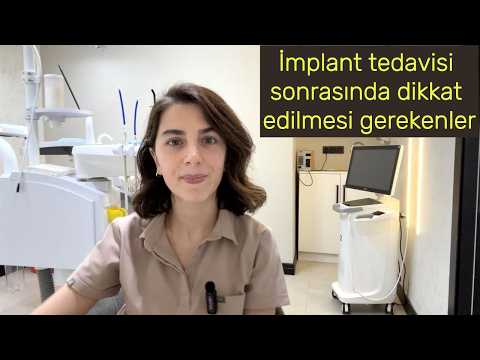
Implant surgery is usually comfortable; what really matters is what is done in the first week after surgery. In this article we summarize, day by day, what you should do from the moment you return home until the end of the first week. For the overall treatment process, see our dental implant treatment page as well.
Day of surgery: until the anesthesia wears off
The effect of the local anesthesia applied during the procedure varies from person to person but generally wears off completely within 4 to 6 hours. During this time, be careful not to bite your tongue, cheek or lip, because you may not notice it due to the numbness.
- The gauze placed after the procedure stays in the mouth for about half an hour. Once the time is up it is removed; there is no need to put in a new one.
- Follow the painkiller plan recommended by your dentist. In our clinic, the painkiller is taken about half an hour before the procedure; depending on its type, it is repeated on a full stomach about 4 hours later, and then continued morning and evening.
- Apply ice to the treated area to reduce swelling.
- After the anesthesia wears off, you can eat warm, soft foods with no grains, for example soup.
- You can brush your teeth the same day, but do not spit the liquid in your mouth; let it flow slowly out of your mouth.
- Avoid hot showers on the day of surgery and the next day.
Days 1 and 2: the wound is new
In the first two days, the most important rule is not to disturb the clot and the stitches over the wound.
- Do not spit, do not use a straw. Spitting and drinking through a straw create a pressure imbalance in the mouth; they can disrupt wound healing.
- Do not use mouthwash for the first 48 hours. Afterwards apply it for 30 seconds and again let it flow out slowly without spitting.
- Raise your head with a pillow. If the procedure was done on both sides, lie on your back with two pillows; try to keep your head above heart level.
- Avoid lying in the sun, hammams and saunas.
Day 3: swelling peaks, relief begins
Swelling varies from person to person but generally increases until the third day and then starts to decrease. Most of our patients stop the painkiller at this point; most people use it for 2-3 days. If bone powder was applied during the procedure, soft tissue was transferred or several implants were placed, pain and swelling may last a little longer.
There is one point to be careful about here: when the pain decreases, people relax and move on to hard, hot and grainy foods. The picture we often see in patients who come for a check-up after the third day is the complaint "I had no pain in the first days, it started later." At the examination we usually see food debris in the area, soft tissue irritation or a torn stitch. So feeling well is not a sign that you can drop the eating rules.
Days 4 to 7: keep eating soft
Even if you have no pain, try to eat soft, warm and grain-free foods for the first week. Stay away from seeded, nutty, crunchy and hard foods and very hot drinks.
First two weeks: smoking
For healing to progress healthily, we recommend not smoking for at least 2 weeks after surgery.
When should you contact your clinic?
- Pain that does not go away despite painkillers or keeps increasing
- Swelling that continues to grow after the third day
- Fever
- Bleeding that does not stop
- If you notice that a stitch has come loose
Do not wait if you are unsure about a situation; a check-up examination often solves the problem while it is still small.
This article is for general information only. Every patient's situation is different; the treatment plan is determined together with your dentist after the examination and any necessary imaging.
Related Videos on This Topic
Watch our specialist dentist explain this topic.